In 1992, Dr. John Gottman started his groundbreaking research on divorce that led to the discovery of what he termed the “Four Horsemen of the Apocalypse” which ruins most marriages. Through a series of landmark studies focused on four simple behaviors, Dr. Gottman could predict with 94% accuracy, whether or not the couples he studied would get divorced within six years.
The Four Horsemen of the Apocalypse are behaviors that, when unchecked, are predictors of divorce. Each of these behaviors represents unpleasant strategies that partners often employ with one another within conflict. Understanding their impact and limiting their existence within your relationships will do you wonders.
The Four Horsemen Are …
Dr. Gottman defined the top four behaviors that predicted divorce as the following:
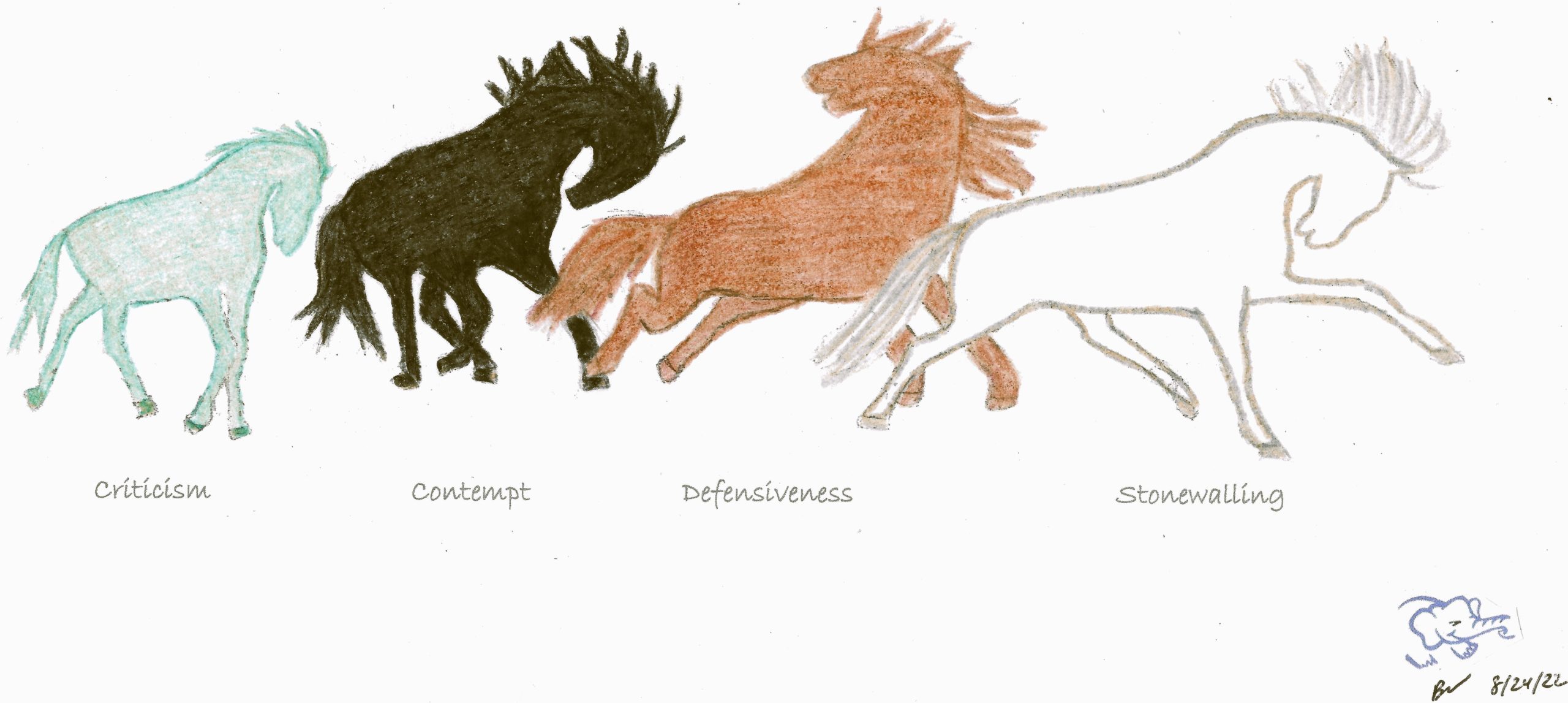
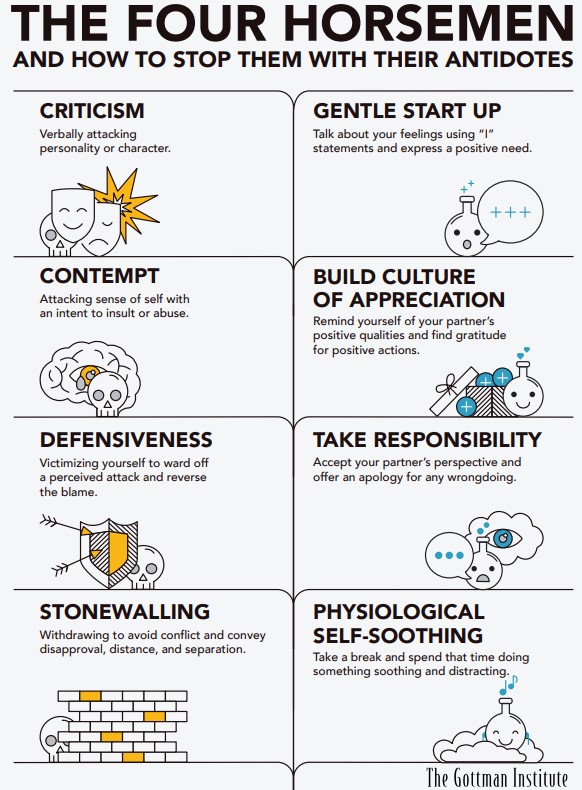
Criticism: attacking your partner’s personality or character, usually with the intent of making someone right and someone wrong.
Contempt: attacking your partner’s sense of self with the intention to insult or psychologically abuse him/her
Defensiveness:seeing self as the victim, warding off a perceived attack
Stonewalling: withdrawing from the relationship as a way to avoid conflict. Partners may think they are trying to be “neutral” but stonewalling conveys disapproval, icy distance, separation, disconnection, and/or smugness
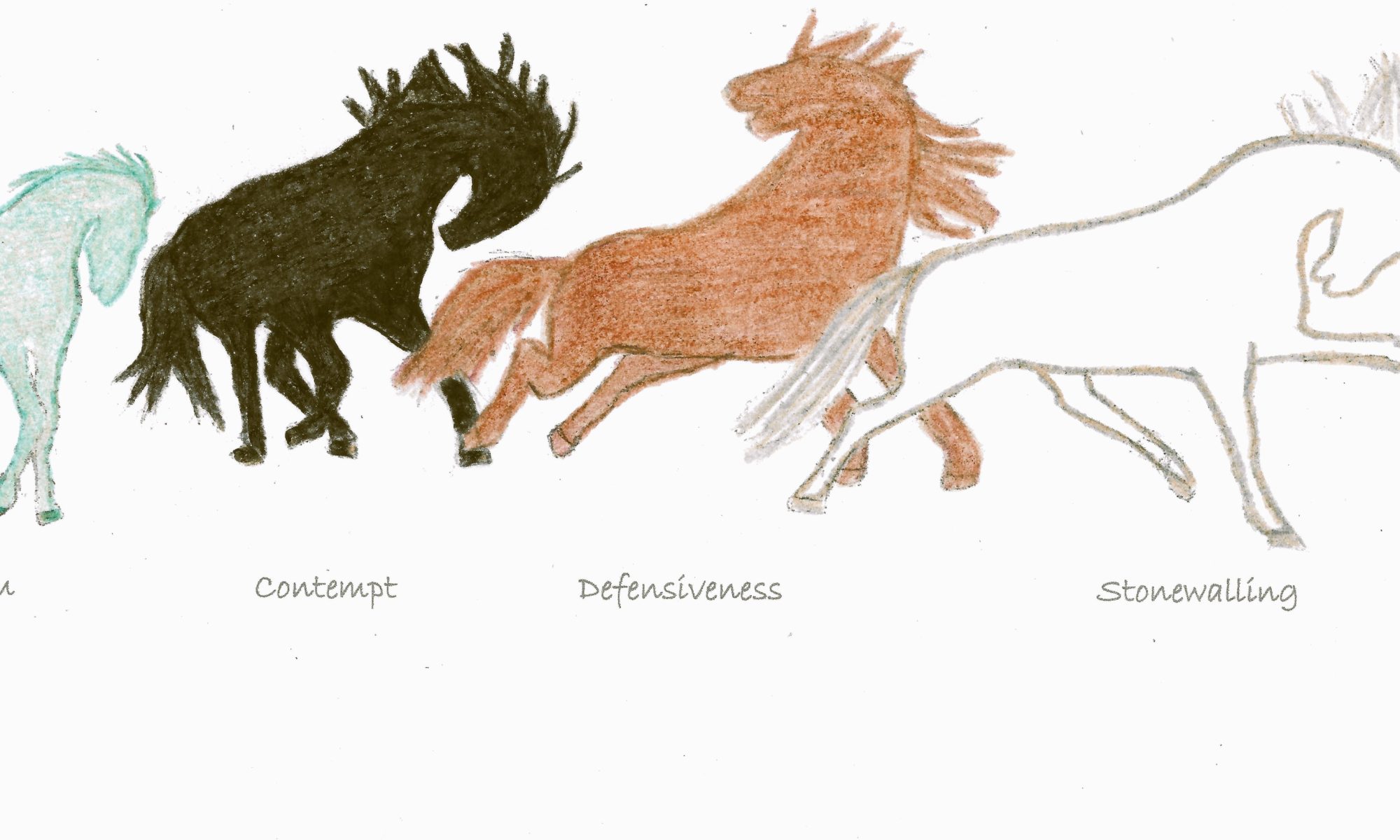
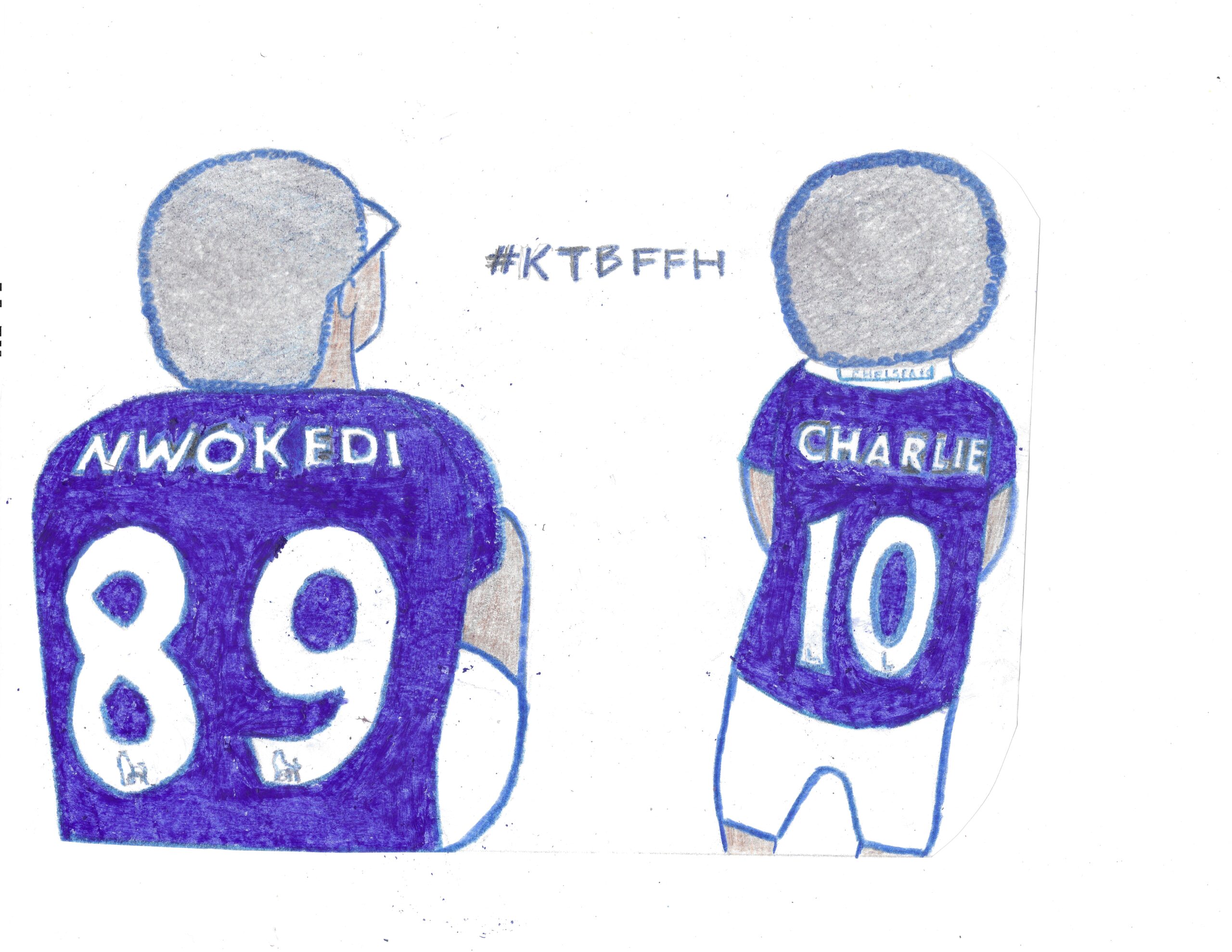
A Drawing of John Gottman’s Four Horsemen by Brian Nwokedi inspired by the 1887 Viktor Vasnetsov painting
The Four Horsemen and How To Stop Them With Their Antidotes
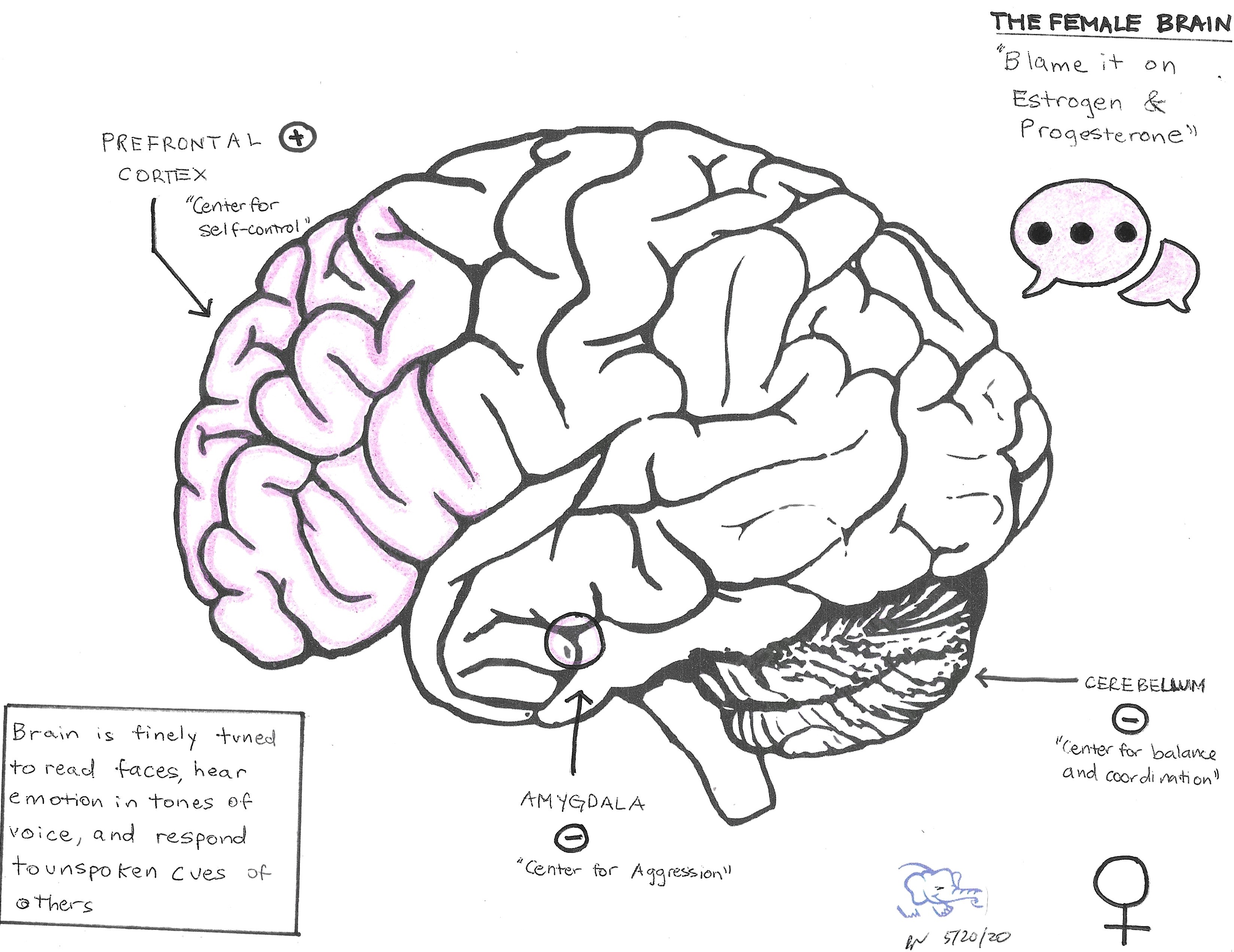
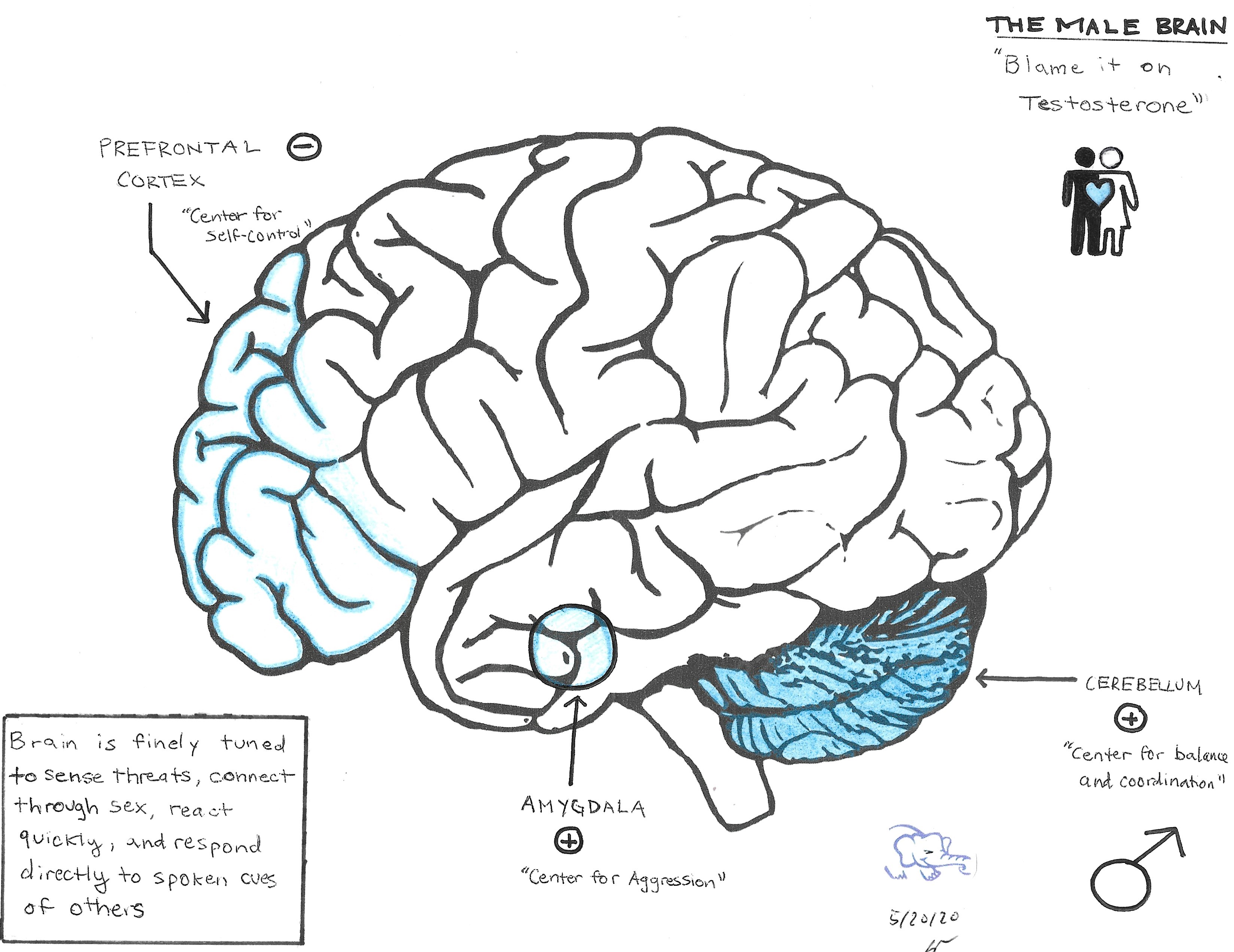
Criticism targets a person’s characteror personality and its antidote is a gentle start-up
Contempt targets a person’s sense of self and its antidote is to build a culture of appreciation and respect
Defensiveness targets you as a victim and its antidote is to take responsibility
Stonewalling targets your relationship and its antidote is physiological self-soothing
Final Thoughts
I once heard that in order for a marriage to survive, the ratio of positive to negative emotions in a given encounter must be at least 5:1. This is because negative interactions often outweigh positive ones.
Successful relationships must have a balance between positive and negative feelings/actions between partners. Conflict in relationships is unavoidable, but successful relationships are those that are able to manage conflict in healthy ways.
The Four Horseman framework translates not just to personal relationships but work relationships as well. It can sometimes be easy to forget how much relationship advice actually translates into the business world because ultimately we are just a collection of people working together ?.
Going forward for me when I see criticism and defensiveness galloping in (the two horsemen that show up the most in my relationships), I will remember this framework and use the appropriate antidote.
“Tranquility is worth pursuing as it is a psychological state in which we experience few negative emotions, such as anxiety, grief, and fear, but an abundance of positive emotions, especially joy”
--- William B. Irvine, A Guide to the Good Life: The Ancient Art of Stoic Joy (2008)
Introduction
We 21st-century humans are a bunch of spoiled brats that don’t realize how good we actually have it. We have climate-controlled buses, that take us to climate-controlled airports, where we board climate-controlled airplanes, that take us anywhere we want in the world. And somewhere in our modern existence, we have lost our ability to remain resilient.
The overarching goal of Stoicism is not to banish emotion or remind calm while suffering a setback. Rather, the goal of Stoicism is to minimize the number of negative emotions one experiences in their life and to suffer setbacks without thereby actually suffering.
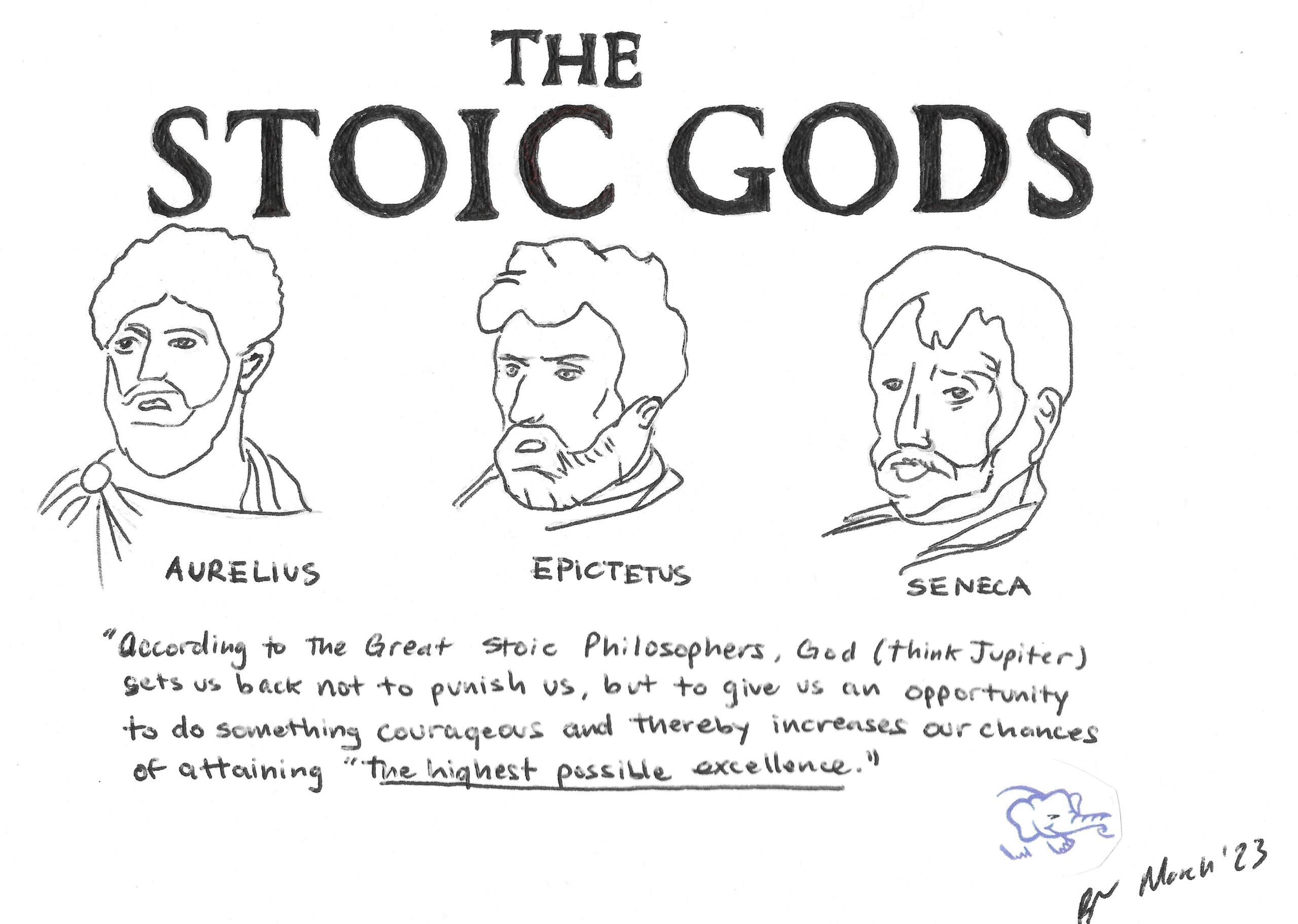
Stoics are not unfeeling human beings. Rather they are humans that have mastered their responses to life’s trials, tribulations, and setbacks. In fact, Stoics often see setbacks as an opportunity to thrive. When faced with a setback, Stoics treat it as a test of their resilience and resourcefulness. They turn the setback into a sort of game (Stoic test) devised and administered by the “Stoic gods. Similar to the concept of framing, the Stoic test relies on the fact that how we mentally characterize a situation has a profound impact on how we respond to it emotionally.
I now understand that a Stoic’s primary goal is to attain and maintain tranquility. That ultimately means striving to avoid experiencing negative emotions while continuing to enjoy positive emotions, especially in the face of setbacks.
What Will I Do Differently As a Result of This Book?
Change my perspective and mindset in such a way as to not experience negative emotions in the first place
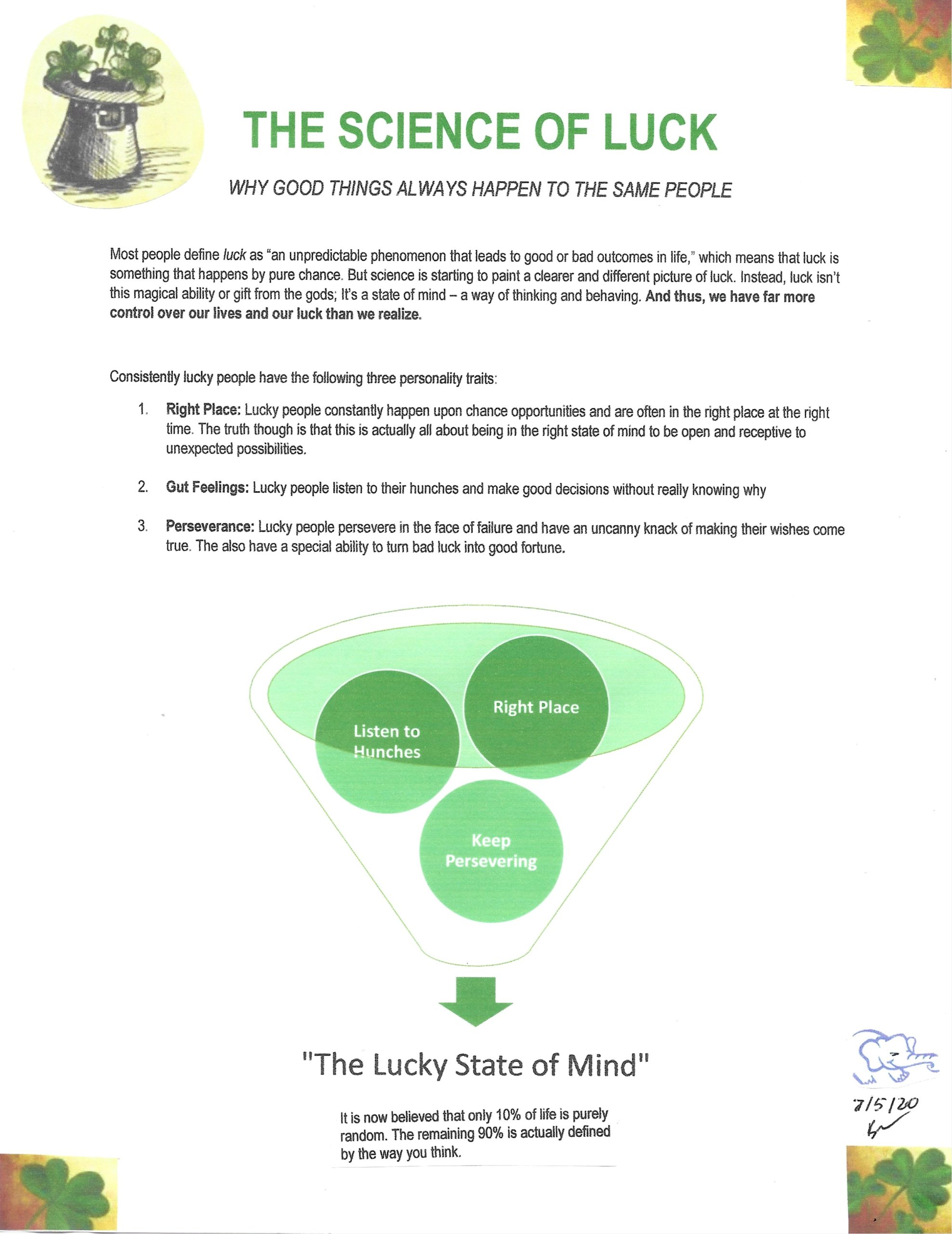
Remember the quote by Charles R. Swindoll “Life is 10% what happens to you and 90% how you react to it.”
Remember that the highest cost by far is the emotional distress a setback triggers i.e. how you react to what happens to you
Review my raw notes on this subject matter continuously and often
Reminder from the Stoic Gods…
God (think Jupiter) sets us back not to punish us but to give us an opportunity to do something courageous and thereby increase our chances of attaining “the highest possible excellence
God, says Senecca, knows that “a man needs to be put to the test if he is to gain self-knowledge” and that “only by trying does he learn what his capacities are.”
This fatherly God wants his children to “know the pain of toil, of suffering, of loss, so that they may acquire true strength.”
Whatever type of God you assume, understand that he is testing you to make you stronger, to develop your character, and to make you more appreciative of the life you are living
Downloadable Content
The goal, under life’s circumstances, should be to make sure that no matter when your editor publishes your novel (your death), it will stand as a complete work – or as complete as is humanly possible. William B. Irvine has written two very good books on Stoicism, and the following book notes have been created to help you with your understanding of William B. Irvine’s work!
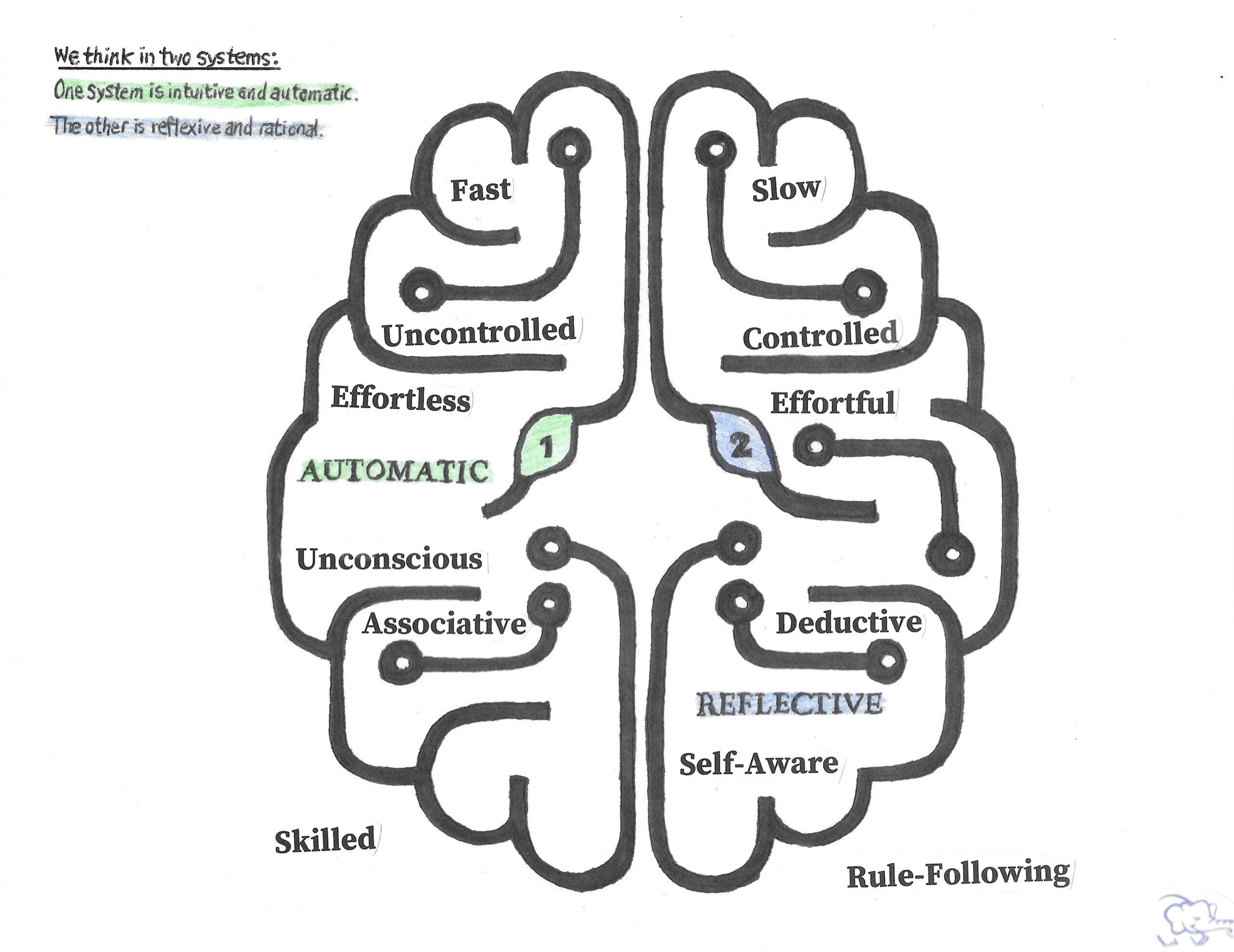
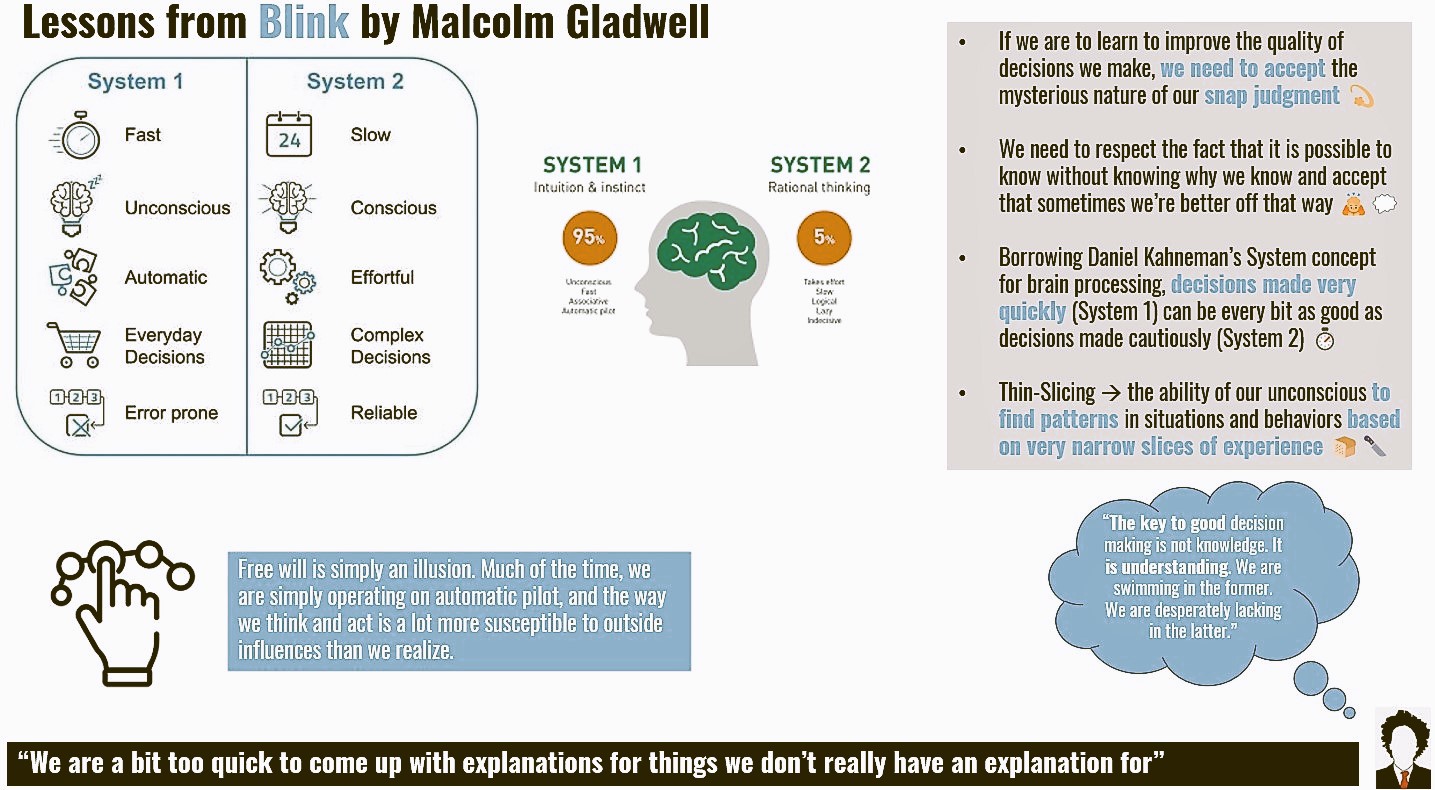
“There are two systems of thought: The Intuitive System 1, which does the fast thinking, and the effortful and slower System 2 which does the slow thinking, monitors System 1, and maintains control as best it can within its limited resources.”
--- Daniel Kahneman, Thinking Fast and Slow (2011)
Introduction
The fact remains whether we like to admit it or not, our minds are susceptible to systematic errors in thinking and judgment. And when we are under pressure or lacking total information, our minds are strongly biased toward causal explanations. To wrap our minds around all the ways we make mistakes in our thinking and judgment, Daniel Kahneman simplified the mind into two systems:
The Intuitive System 1 thinks VERY FAST
The effortful and controlled System 2 thinks VERY SLOWLY
The point Kahneman drives home in his book is by learning to recognize these patterns of thinking in yourself, you can minimize the mistakes when the stakes are highest.
System One … The Hare … All Gas No Brakes!
To put it quite simply: System 1 thinking is impulsive and intuitive and is designed to jump to conclusions from very little evidence. What’s worse, System 1 isn’t designed to know the size of the jumps it is making in its thinking. With System 1, WHAT YOU SEE IS ALL THERE IS (WYSIATI), and because of this, only the evidence at hand counts. In the absence of an explicit context, System 1 will generate its own context, and it really excels at constructing the best possible story … Are you scared yet? If not you should be!
System 1 is highly adept in one form of thinking … Automatic and Effortless. It identifies causal connections between events, sometimes even when the connection itself is spurious.
System Two … The Tortoise … All Brakes No Gas!
Like most things in life, there is a yin-and-yang or balance to things. Your brain’s method of thinking is no different. If System 1 is your default, fast, and reflexive method of thinking, System 2 is the opposite of this. To be specific, System 2 controls thoughts and behaviors, and it is the only system that can follow rules, compare objects on several attributes, and make deliberate choices between options.
Okay… Now What?
Here is the thing… Regardless of Systems 1 and 2, our brains are pattern-matching machines subject to a plethora of cognitive biases. Here are a couple of my favorites:
Anchoring Effect
Availability Heuristic
Halo Effect
Hindsight Bias
Representativeness Heuristic
We often ignore relevant statistical facts and we rely almost exclusively on rules of thumb. When you factor in that System 1 is our default fast way of thinking, and the deep, deliberate, and controlled System 2 way of thinking is lazy and hard to consistently deploy, it’s not surprising that we humans make a ton of decision-making errors. Often, we are inconsistent in our evaluations, and we often make errors in summary judgments. Kahneman found in his research that humans when asked to evaluate the same information twice frequently give different answers.
Reading through Daniel Kahneman’s work convinces me of a couple of solutions to human decision-making shortcomings that a lot of us humans are not going to like to hear… Humans need help to make good decisions, and there are informed and unobtrusive ways to provide this help:
Whenever we can replace human judgment with a formula, we should at least consider it.
Since machines are more likely than human judges to detect weakly valid cues, we should consider complementing or augmenting human-only judgments with human + machine judgments
Maximize predictive accuracy by using machine logic, especially in low-validity environments
Conclusion and Final Thoughts
In Thinking Fast and Slow, Daniel Kahneman set out to improve the ability in all of us to identify and understand errors of judgment, and choice in others, and ultimately in ourselves! He wanted to provide his readers with a richer and more precise language to discuss decision-making and thinking within the brain. Because our System 1 method of thinking is our default and intuitive way of thinking, it’s easy for us to ignore relevant statistical facts that don’t fit the patterns we want. By nature, our slower and more methodical way of thinking (System 2) takes more time than we want and is lazy by nature. Humans need help to make good decisions because there is overwhelming evidence that we Humans can’t think rationally 100% of the time.
What Will I Do Differently As a Result of This Book?
Learn to recognize situations in which mistakes are likely and try harder to avoid making significant decision-making mistakes when the stakes are high
Understand that even when I think that I am being rational there is a good chance my default System 1 way of thinking has quickly pattern-matched and downplayed disconfirming information.
Understand how deep the halo effect goes in clouding/painting my judgment of a person with a favorable first impression versus not.
The major source of error in forecasting is our prevalent tendency to underweight or ignore distributional information. We forecast based on information in front of us (WYSIATI).
Consequently, I will therefore make every effort to frame the forecasting problem so as to facilitate utilizing all the distributional information that is available
Here is the thing … We are pattern seekers, believers in a coherent world in which regularities appear not by accident but as a result of mechanical causality or of someone’s intention.
This fact means that we humans often misclassify random events as systematic and we are far too willing to reject the belief that much of what we see in life is random.
This means for me, as I continue to plan I MUST EMBRACE THE RANDOMNESS OF LIFE!
Lastly, beware when I am in a good mood and I have had limited sleep … My System 2 will be weaker than usual and I should pay extra attention to my default System 1.
Downloadable Content
Thinking Fast, and Slow is a must-read for anyone interested in gaining insights into the Human mind and the manner in which decisions are made. The following book notes have been created to help you with your understanding of Daniel Kahneman’s concepts within Thinking Fast, and Slow.
This section contains PowerPoint “art”, sketches, visual summaries, and “flashes of insights” for use in presentations and more. If you like any of the content posted on this page, consider supporting my efforts with a cup of coffee or a donut ☕?.
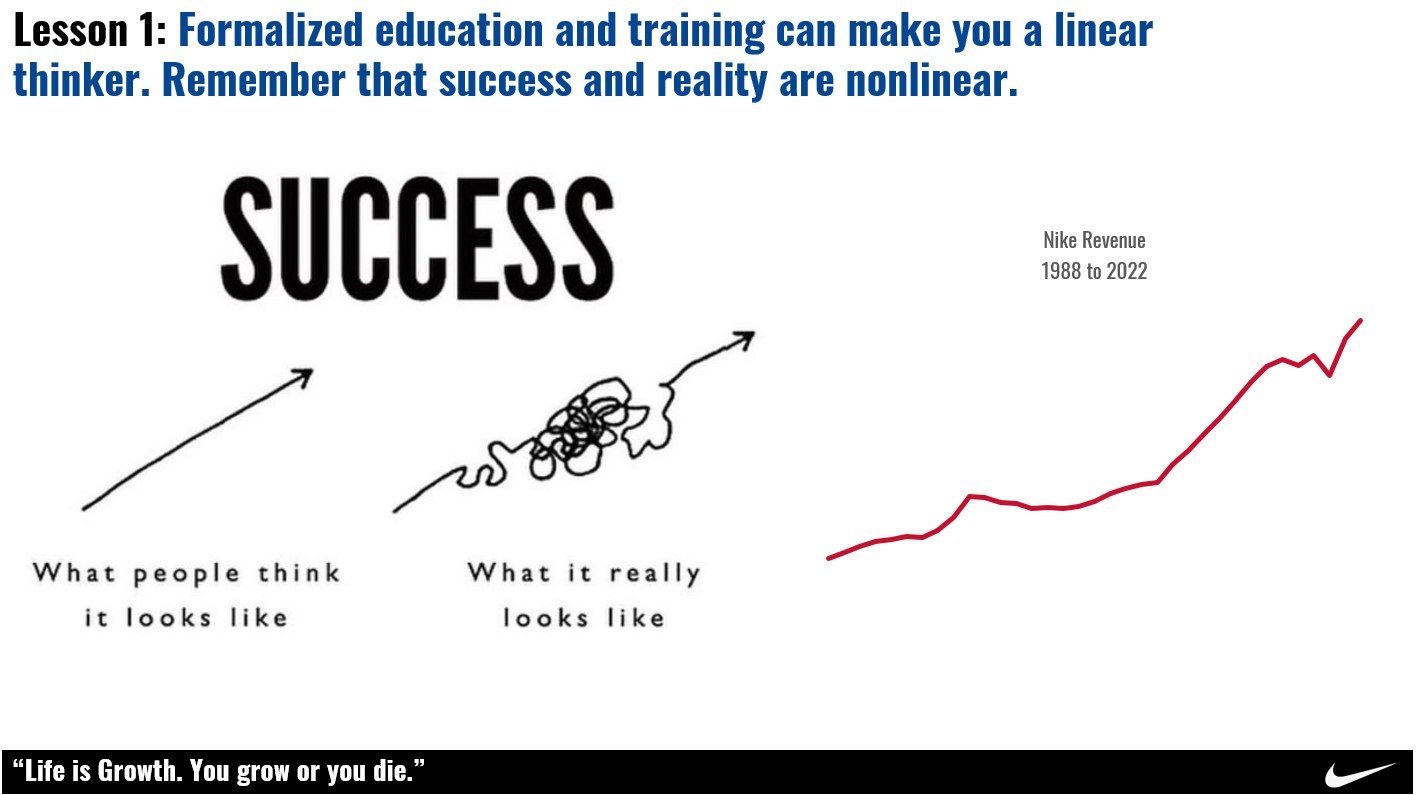
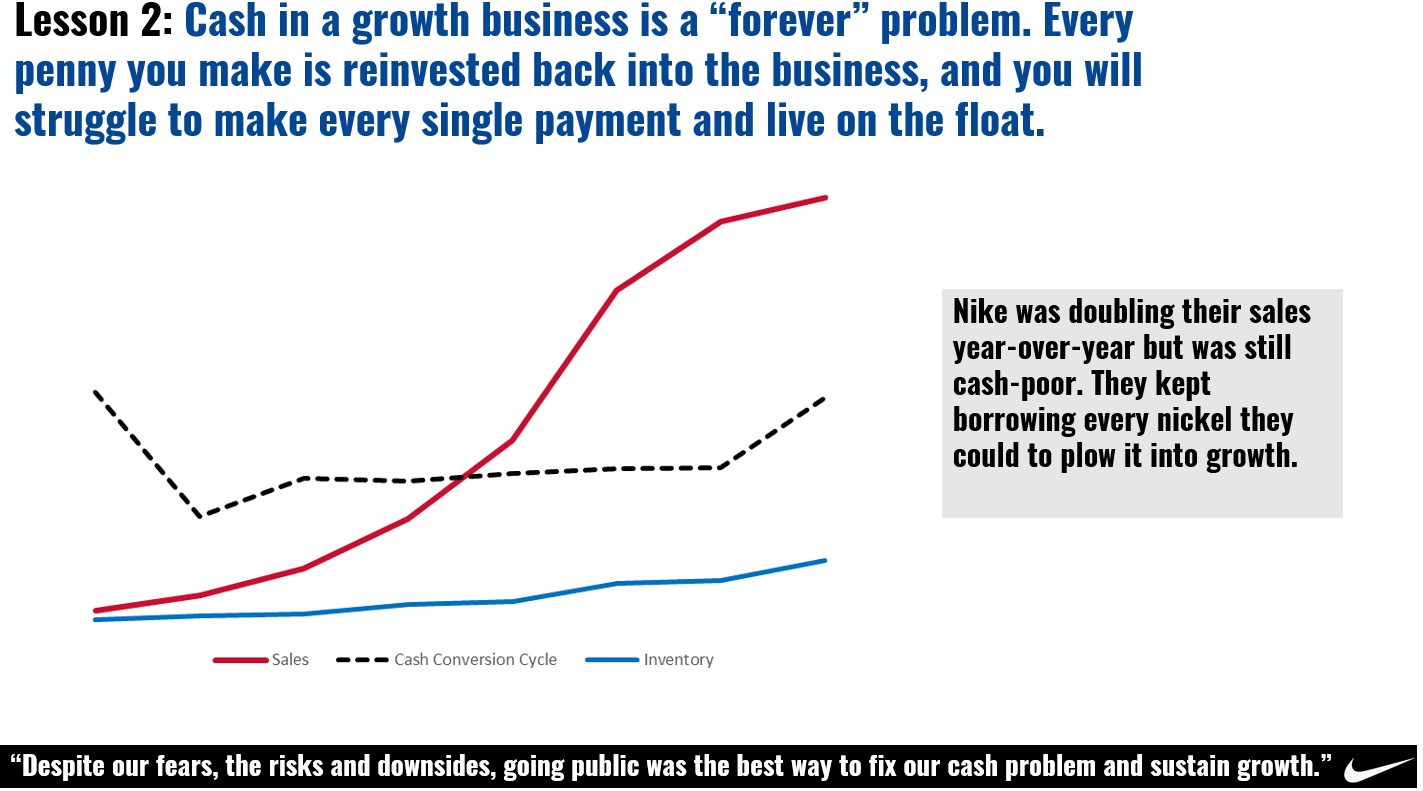
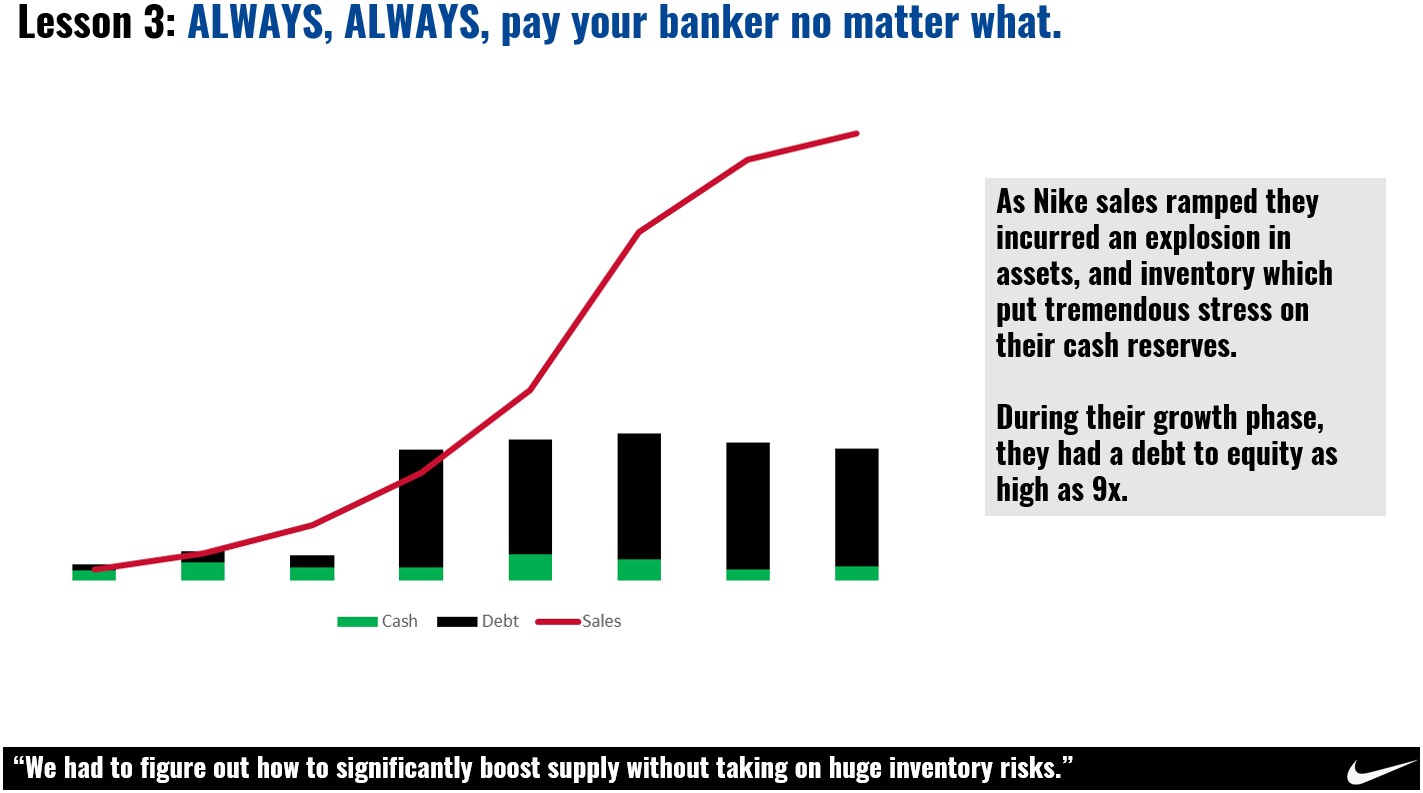
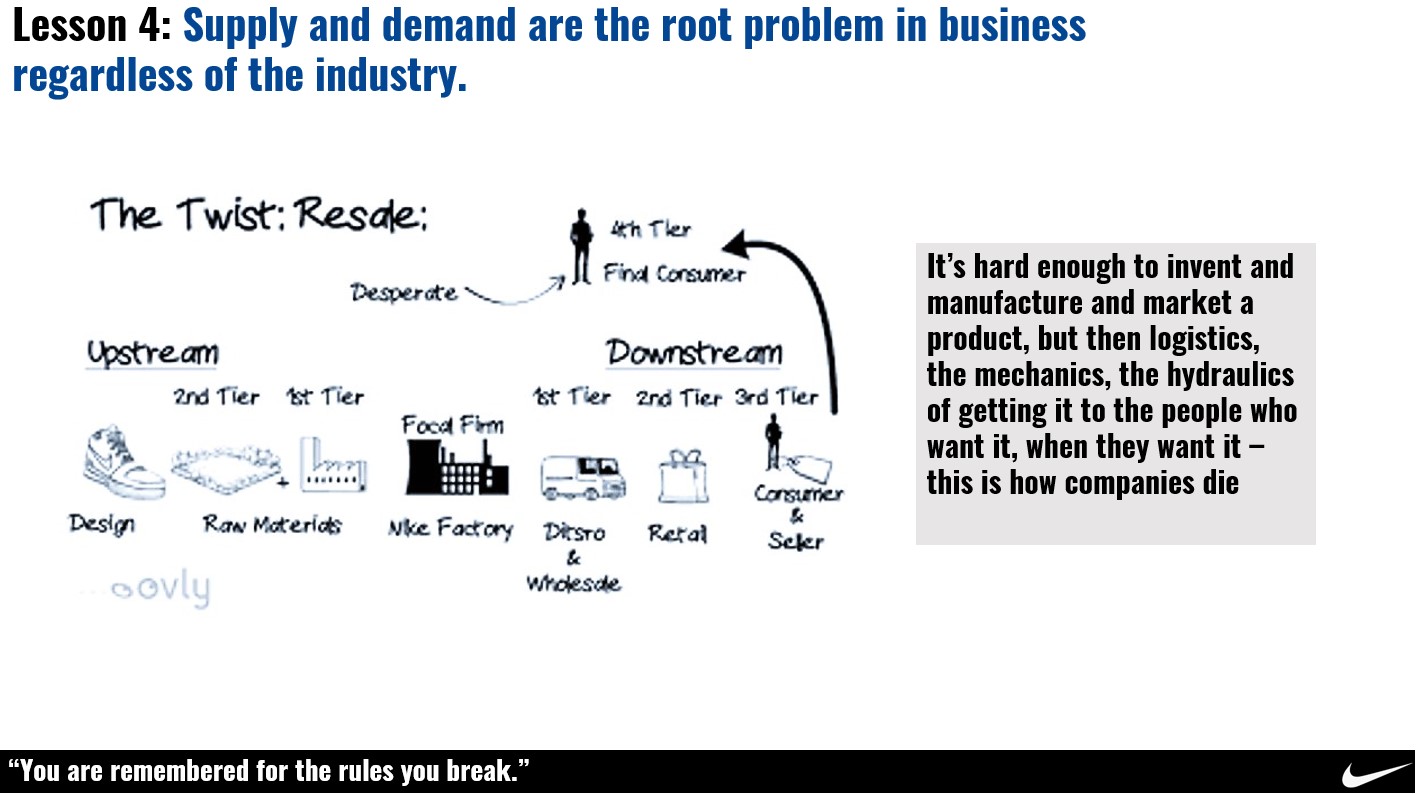
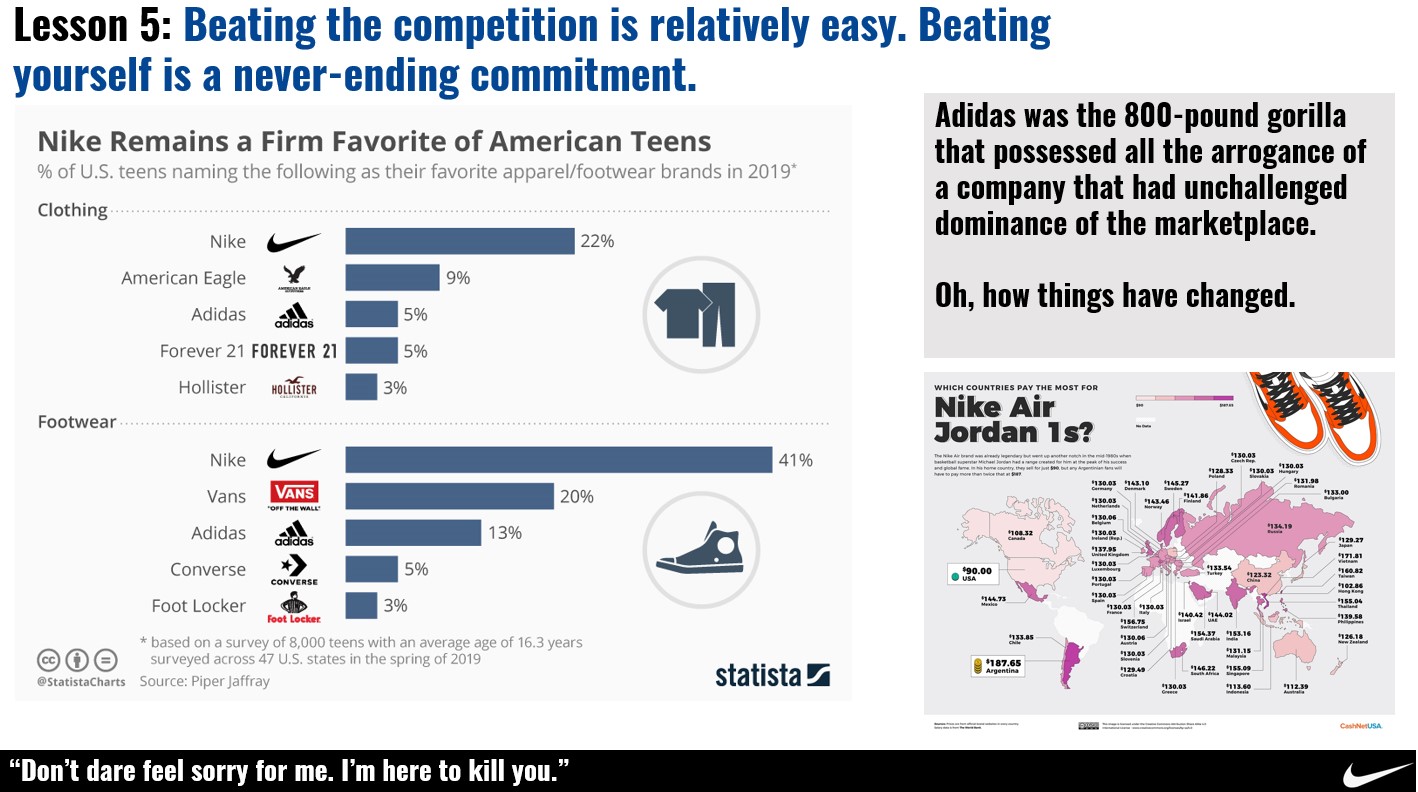
Life is Non-Linear by Brian NwokediGrowth Businesses Never Have Enough Cash by Brian NwokediAlways Service Your Debt by Brian NwokediCompetition is Yourself by Brian NwokediCompetition is Yourself by Brian Nwokedi
Thinking Fast and Slow Picture Summary by Brian Nwokedi. There are two systems of thought: The Intuitive System 1 and the Effortful System 2
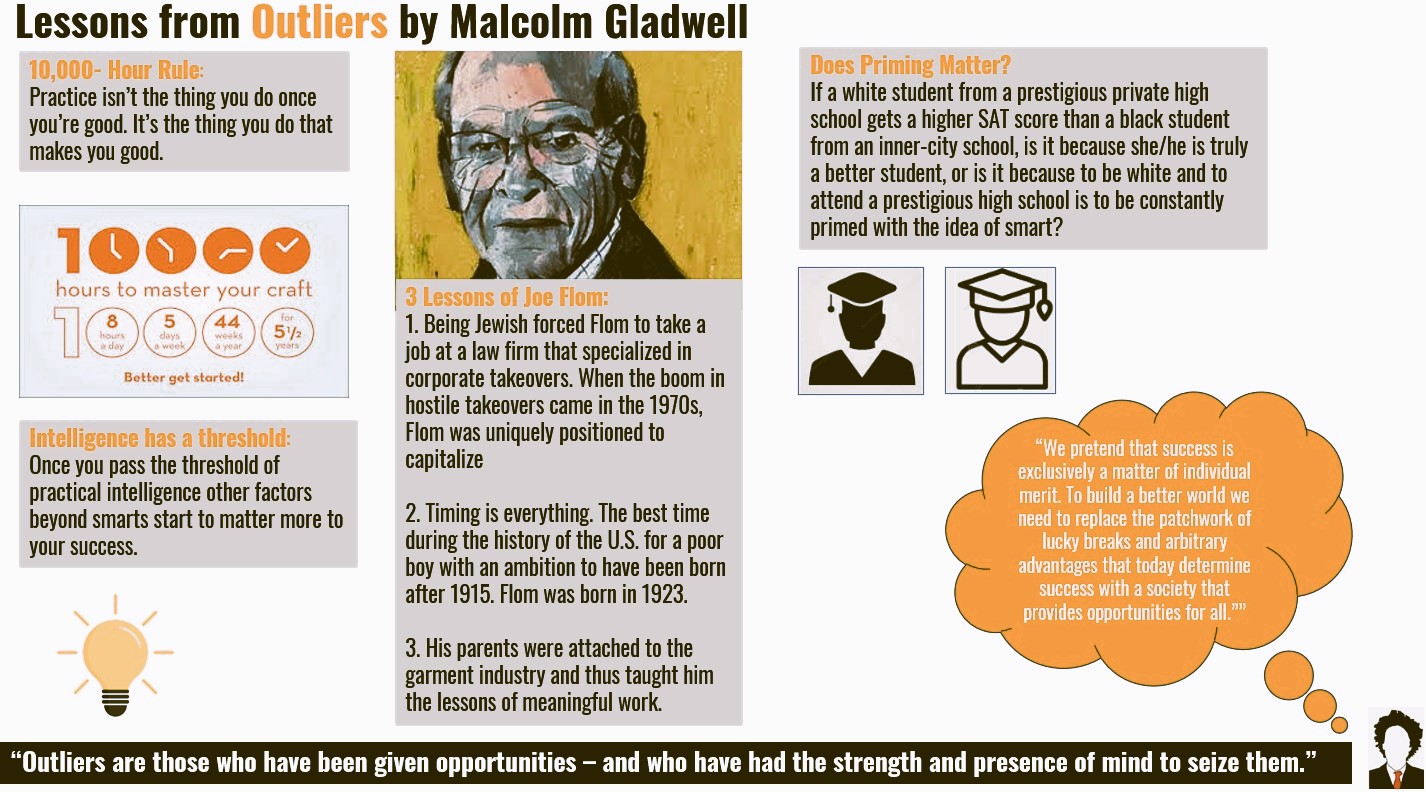
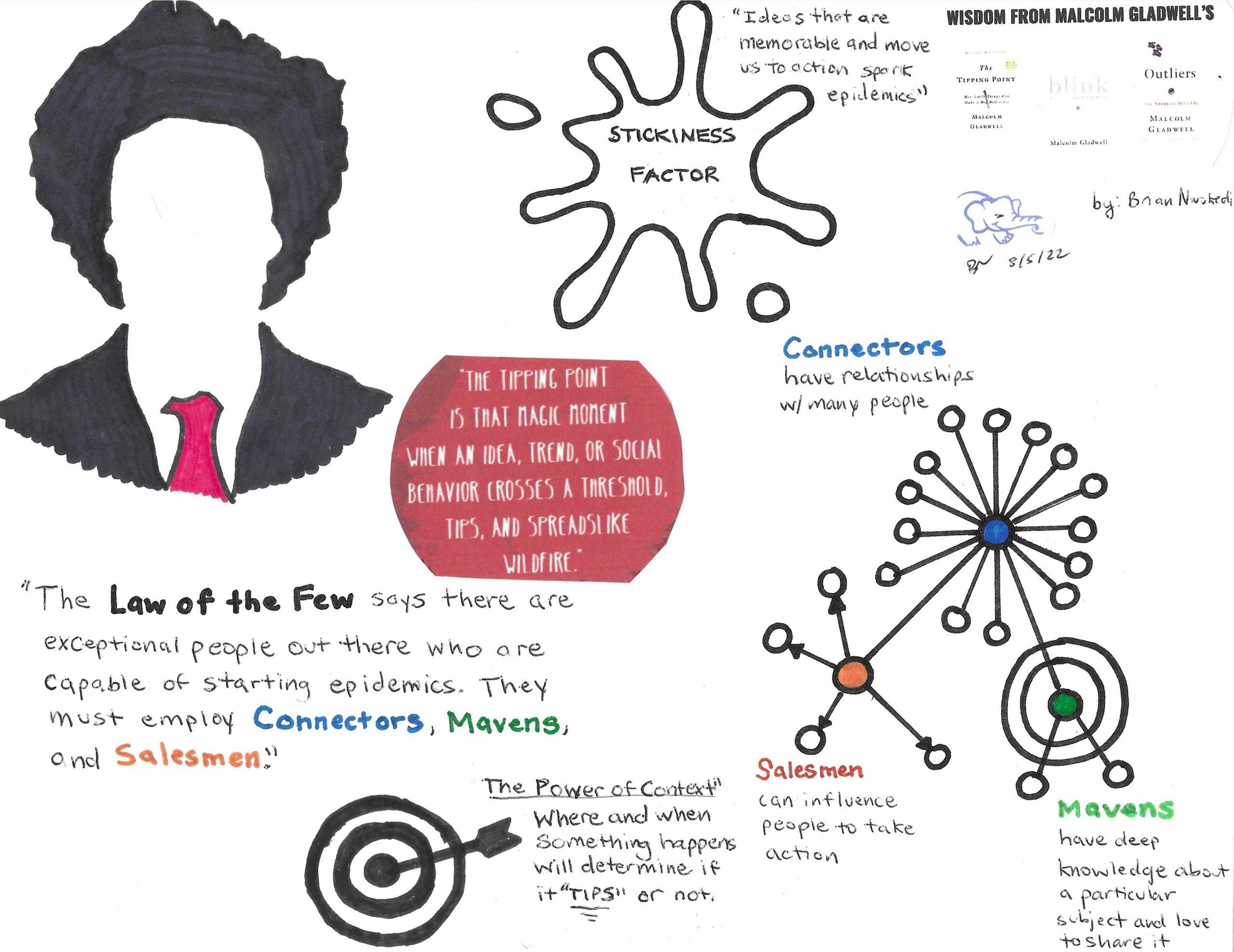
Wisdom of Malcolm Gladwell:
If we are to learn to improve the quality of decisions we make, we need to accept the mysterious nature of our snap judgments. We need to respect the fact that it is possible to know without knowing why we know and get that sometimes we’re better off that way.Outliers are those who have been given opportunities – and who have had the strength and presence of mind to seize them. To build a better world we need to replace the patchwork of lucky breaks and arbitrary advantages that today determine success – the fortunate birth dates and the happy accidents of history – with a society that provides opportunities for all.
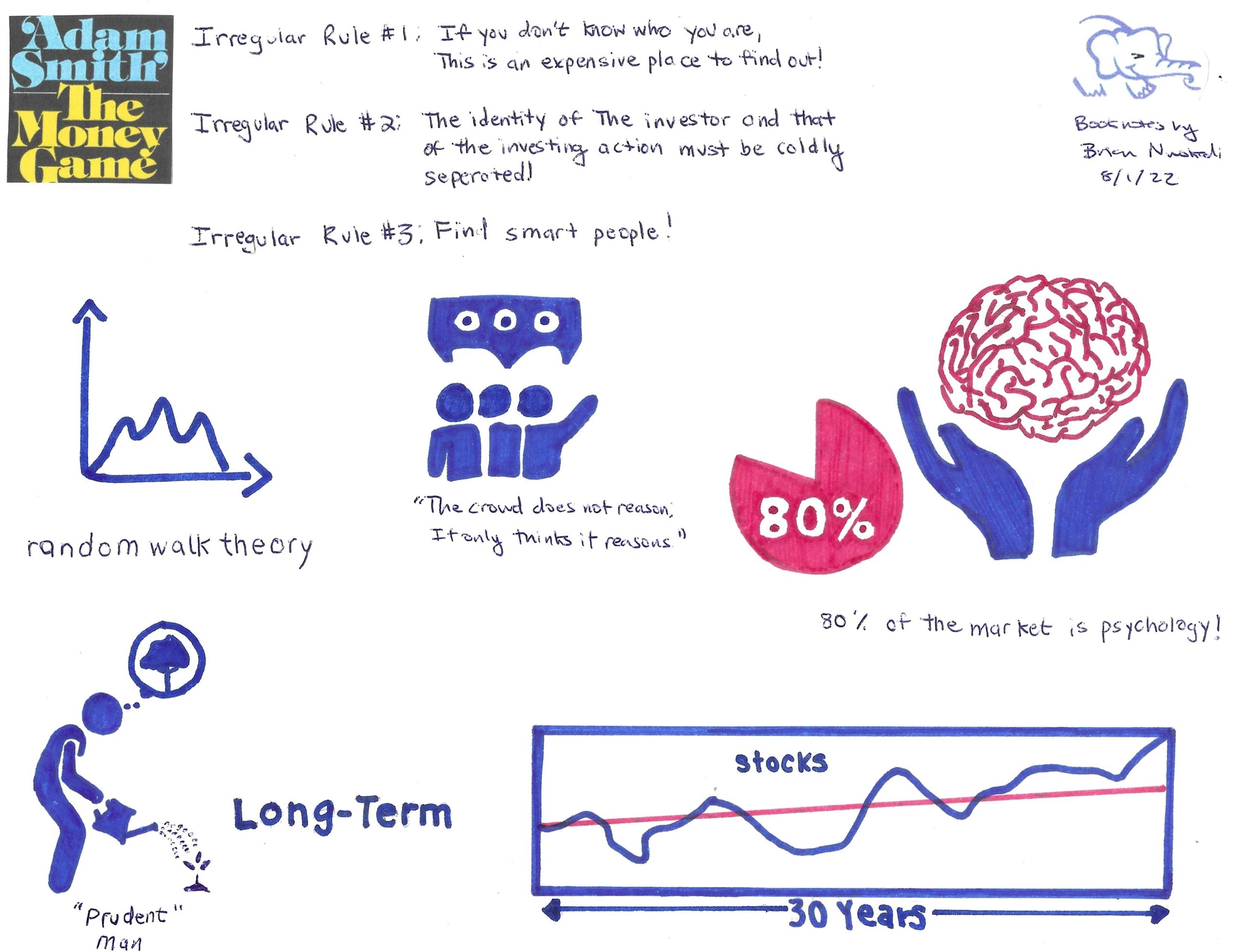
What if I told you that the whole point of the stock market is not to make money? What if I told you that the stock market itself is just a Game, and the real object of this Game is not money; it’s the playing of the Game itself?
In The Money Game Adam Smith (also known as George J. W. Goodman) sets out to explain how the stock market is a Game to be played with objectives that oftentimes do not make sense. While money preoccupies so much of our consciousness, The Money Game is adamant that making money is not the real objective of playing the stock market Game. The sooner we realize that the stock market Game is an irrational one, the better we will play it.
Through a series of chapters asking questions and describing real events and real characters (real but masked), George J. W. Goodman sets out to explore the unexplored area of the markets … the emotional area. As he states very eloquently in Chapter 2, “There are fundamentals in the marketplace, but the unexplored area is the emotional area. All charts and breadth indicators and technical palaver are the statistician’s attempts to describe an emotional state.
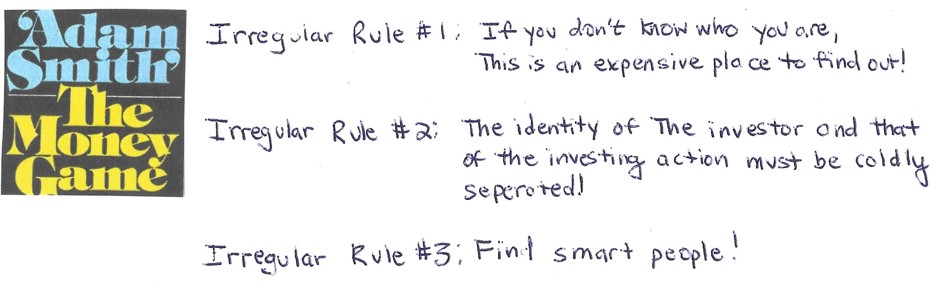
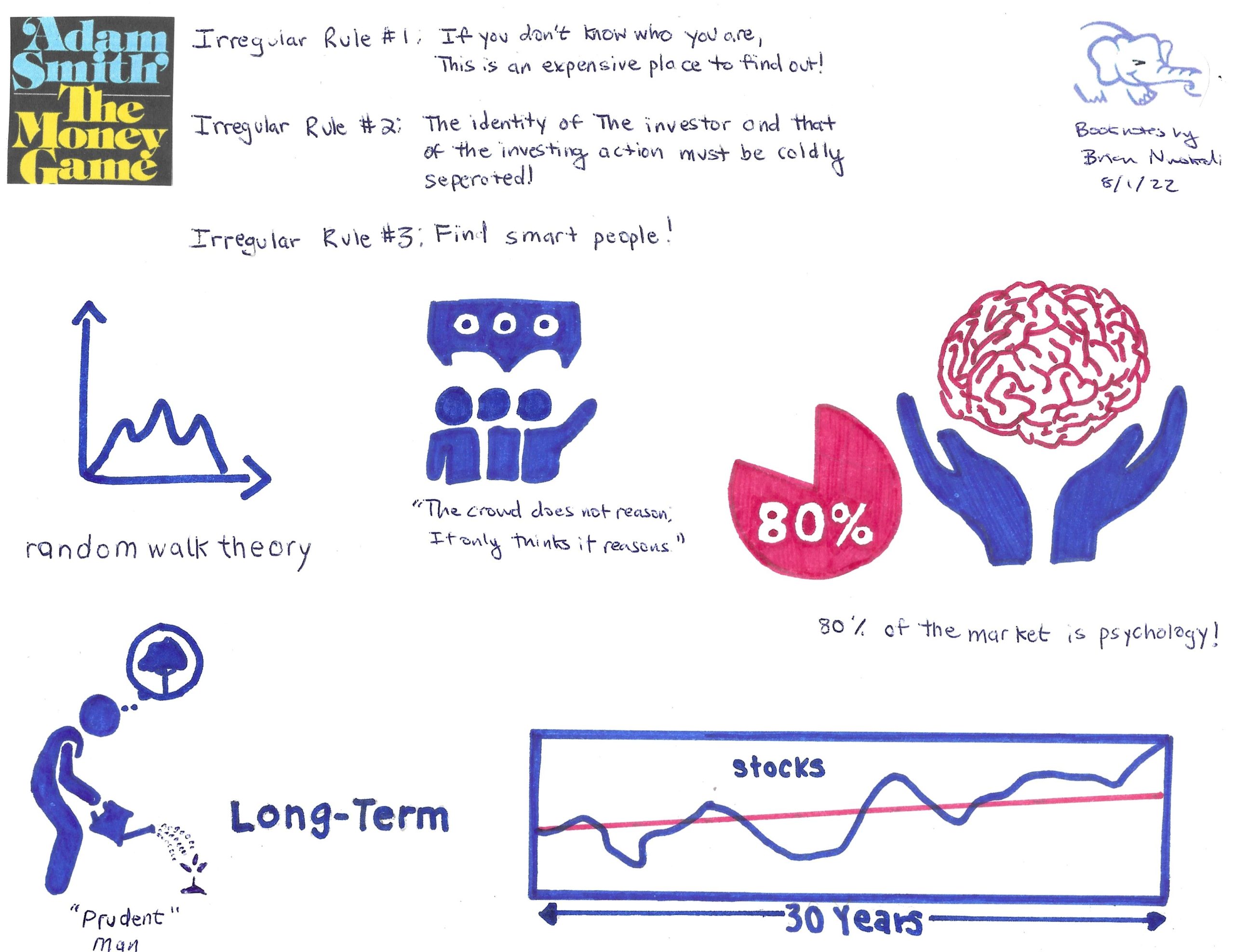
In the end, the one requirement to win The Money Game is to remember the Irregular Rule: If you don’t know who you are, this is an expensive place to find out. Emotional maturity must be displayed over the long run if you are going to survive the game called the stock market.
My Summary Conclusions from Each Chapter
Part I. YOU: Identity, Anxiety, Money: Chapter 1-9
Preface: The game we create with it is an irrational one, and we play it better when we realize that, even as we try to bring rationality to it.
• Chapter 1: The word game was deliberately chosen to describe the stock market and the sooner that all of us small investors understand that this is a game, the better off we may be.
• Chapter 2: Do not forget the Irregular Rule: If you don’t know who you are, this is an expensive place to find out!
• Chapter 3: It all comes back to the Irregular Rule that you must know yourself for the stock market is an expensive place to find that out. The requirement to win this game is emotional maturity.
• Chapter 4: Since 80% of the market is psychology or deeper still human emotionality, the market can really be seen as a crowd. Because of this tendency, there is no substitute for good information, good research, and good ideas.
• Chapter 5: On one hand you have Adam Smith the father of modern economics stating definitely that money is about the maximization of profit and in some sense the accumulation of wealth (i,e. The Wealth of Nations). On the other hand, you have Norman Brown who sees money as a noose around our necks that ultimately makes our human nature impoverished. You must decide for yourself!
• Chapter 6: There are countless reasons people get into the Game. Some people love to gamble and lose. Others just want to make money over the long term by owning stocks forever. Regardless of your reason, you need to know yourself and stick to your plans.
• Chapter 7: The only real protection against all the ups and downs of the market (the anxiety) is to have an identity so firm it is not influenced by all the brouhaha in the marketplace. And remember, the stock doesn’t know you own it!
• Chapter 8: So if we are talking about real big money, forget the stock market. Build a company and have the market capitalize on your earnings.
• Chapter 9: The “simple equation of wealth”: To get rich, you find a stock whose _ has been compounding at a very fat, and then the stock zooms, and there you are.
Part II. IT: Systems: Chapter 10-14
Chapter 10: Charting assumes that what was true yesterday will also be true tomorrow. But you and I know that past patterns/performance are not predictive of future patterns/performance.
• Chapter 11: To quote Professor Fama, “the history of the series of stock price changes cannot be used to predict the future in any meaningful way. The future path of the price level of security is no more predictable than the path of a series of cumulated random numbers. If the random walk is indeed Truth, then all charts and most investment advice have the value of zero, and that is going to affect the rules of the Game.
• Chapter 12: The Game is such that computers take away any long-term advantages individuals find. Our only chance is to rely on luck (random walk thesis).
• Chapter 13: The numbers created by “independent auditors” should be looked at with a grain of salt given that the accountants are paid and hired by the companies themselves.
• Chapter 14: Someone has to be on the losing end of the transaction and that is usually the little investor.
Part III. THEY: The Pros: Chapter 15-18
Chapter 15: Professional investors are “performance” managers who are focused on driving results in the short term. Very few “performance” managers think in the long term. It’s all about driving big capital gains!
• Chapter 16: Like everything in life, those that are really in the know!
• Chapter 17: The market does not follow logic, it follows some mysterious tide of mass psychology.
• Chapter 18: If you are in the right thing at the wrong time, you may be right but have a long wait; at least you are better off than coming late to the party.
Part IV. VISIONS OF THE APOCALYPSE: Can it All Come Tumbling Down? Chapter 19-20
Chapter 19: Sooner or later you have to come to reality, and stop being a father to the world. Lead it, yes. Buy it. No.
• Chapter 20: Sure, it can all come tumbling down. All it takes is for belief to go away!
Part V. VISIONS OF THE MILLENNIUM: Do You Really Want to Be Rich?
Chapter 21: You need to create your own money philosophy to answer the question do you really want to be rich?
Visual Summary of Key Findings from Book
“Unfortunately, as we have seen, the playing of the Game is not entirely a rational affair. There is nothing so disastrous, said Lord Keynes as a rational investment policy in an irrational world”
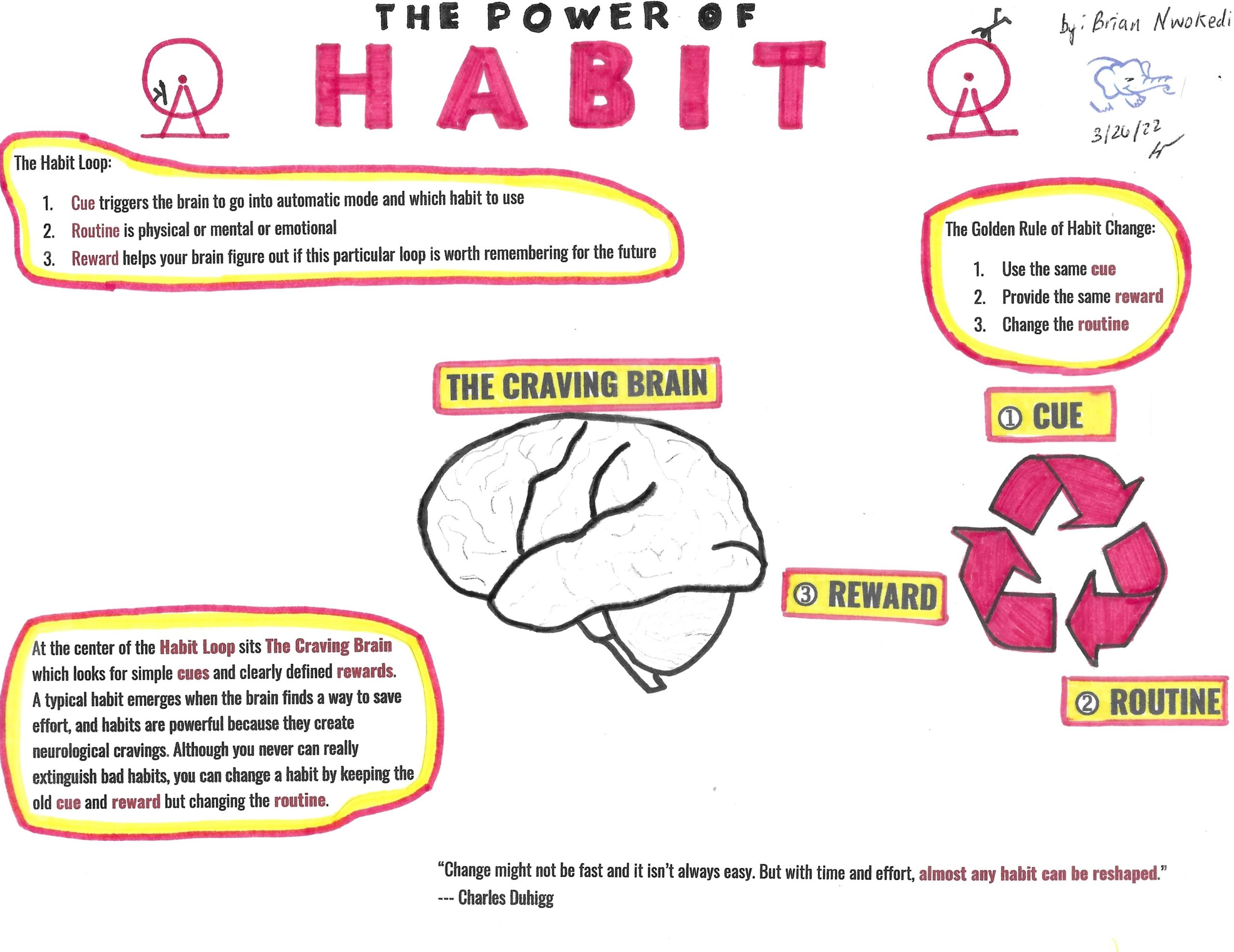
"Change might not be fast and it isn't always easy. But with time and effort, almost any habit can be reshaped."
--- Charles Duhigg, The Power of Habit (2012)
Summary
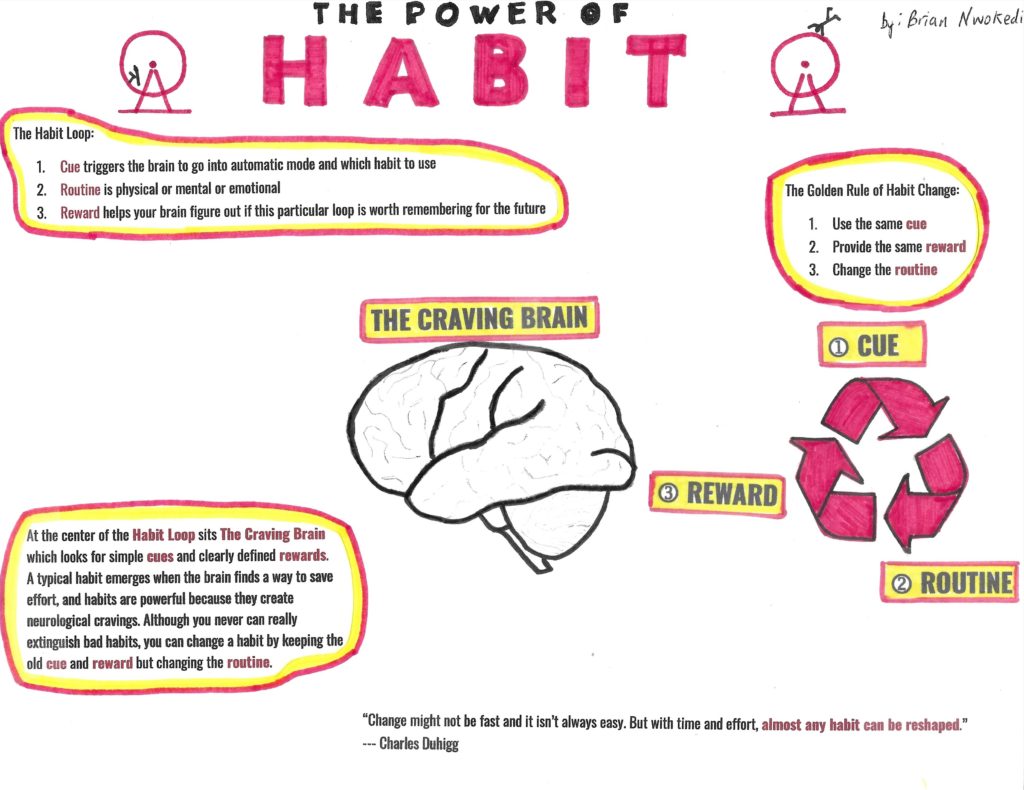
At the center of the Habit Loop sits the Craving Brain which looks for simple cues and clearly defined rewards. A typical habit emerges when the brain finds a way to save effort, and habits are powerful because they create neurological cravings. When a habit emerges, the brain stops fully participating in decision-making. Although you never can really extinguish bad habits, you can change a habit by keeping the old cue and reward but changing the routine.
Three-Step Loop
A cue triggers the brain to go into automatic mode and which habit to use
The routine is physical or mental or emotional
The reward helps your brain figure out if this particular loop is worth remembering for the future
How To Change a Habit
By focusing on the keystone habit, you can fix a myriad of other habits in the process. You must work to identify cues and choose new routines in order to change your habits. But for habits to permanently change, people must believe that change is feasible.
In closing, to modify a habit, you must decide to change it. You must consciously accept the hard work of identifying the cues and rewards that drive the habits’ routines and find alternatives. You must know you have control and be self-conscious enough to use it.
The real power of habit is the insight that your habits are what you choose them to be. It is important to note that no matter how strong our willpower is, we are guaranteed to fall back into our old ways once in a while
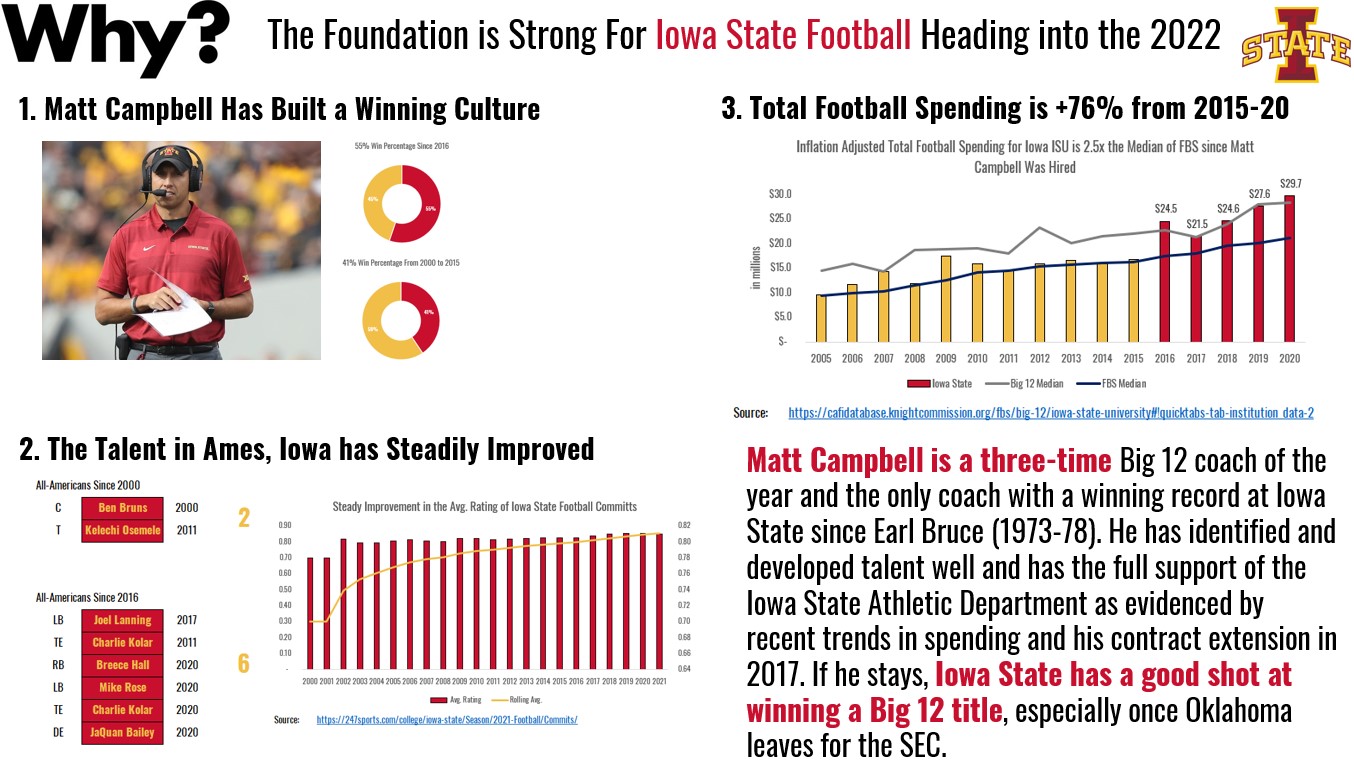
"Iowa State's upward rise has been all about identifying and developing talent"
---  Blair Angulo & Steve Wiltfong of 247 Sports
The foundation is built for Iowa State Football heading into the 2022 season. Although they lose a lot of veteran starters like Brock Purdy and Charlie Kolar, recruiting has picked up substantially. Iowa State is slowly becoming a solid contender for the Big 12 year in and year out.
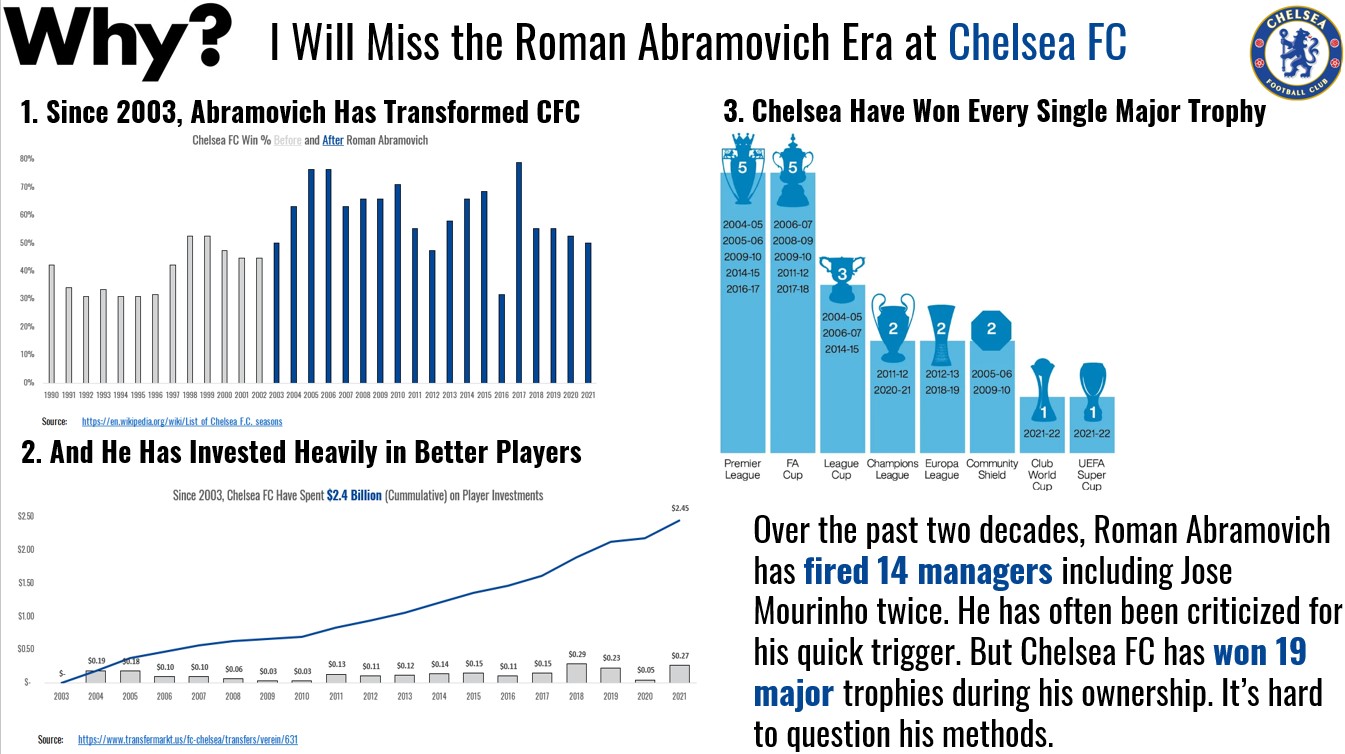
"I would like to address the speculation in media over the past few days in relation to my ownership of Chelsea FC. As I have stated before, I have always taken decisions with the Club’s best interest at heart. In the current situation, I have therefore taken the decision to sell the Club, as I believe this is in the best interest of the Club, the fans, the employees, as well as the Club’s sponsors and partners."

--- Roman Abramovich. March 3, 2022
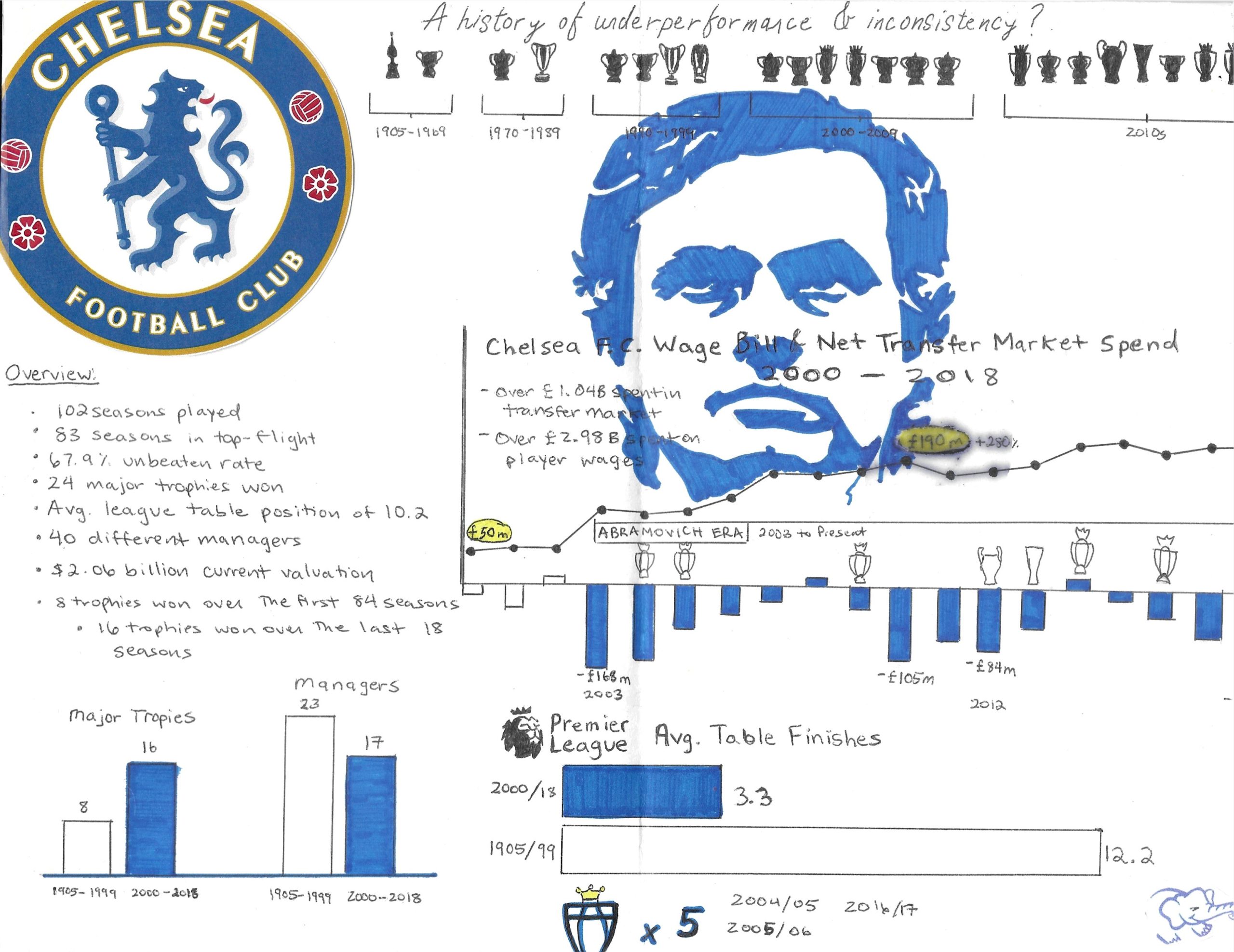
Chelsea FC has averaged winning one major trophy a year since Roman Abramovich took over in 2003. They are also only 1 of 5 teams in Europe to win every single major trophy at least once.